Search Engine Optimization (SEO) is one of the most effective ways to increase your website’s visibility online. When your website ranks higher on search engines like Google, more people can discover your content, products, or services. Higher rankings lead to more organic traffic, stronger credibility, and better business growth.
However, ranking on the first page of search results is not easy. Millions of websites compete for attention, and search engines use complex algorithms to determine which pages deserve the top positions.
The good news is that by applying proven SEO strategies, you can improve your website rankings and attract consistent organic traffic. In this guide, you will discover practical SEO expert tips that can help optimize your website, improve user experience, and boost your search engine rankings.
What Is SEO and Why Does It Matter
SEO stands for Search Engine Optimization. It is the process of improving your website so that it appears higher in search engine results pages (SERPs).
When users search for information, they usually click on the first few results. If your website ranks higher, it gets more visibility and traffic.
Key benefits of SEO include:
- Increased organic traffic
- Higher brand credibility
- Better user experience
- More leads and conversions
- Long-term online growth
Unlike paid advertising, SEO continues to bring traffic even after the content is published and optimized.
Keyword Research: The Foundation of SEO
Keyword research helps you understand what users are searching for online. When you target the right keywords, your content becomes more relevant to search queries.
Popular tools for keyword research include:
- Ahrefs
- SEMrush
- Google Keyword Planner
- Ubersuggest
These tools help you discover search volume, keyword difficulty, and related keywords.
Focus on Long-Tail Keywords
Long-tail keywords are longer and more specific phrases. They usually have lower competition and are easier to rank for.
Examples include:
- SEO expert tips for beginners
- SEO tips to improve website rankings
- How to increase website traffic using SEO
- Best SEO strategies for small businesses
Long-tail keywords often bring more targeted visitors who are actively looking for solutions.
Read More: SEO Basics for Small Business to Boost Website Traffic
Optimize Your On-Page SEO
On-page SEO refers to optimizing elements on your website pages to make them more search engine-friendly.
Title Tag Optimization
Your title tag is one of the most important ranking factors. It tells both users and search engines what your page is about.
Best practices include:
- Include your main keyword
- Keep it under 60 characters
- Make it compelling and clear
Example:
SEO Expert Tips to Improve Your Website Rankings Fast
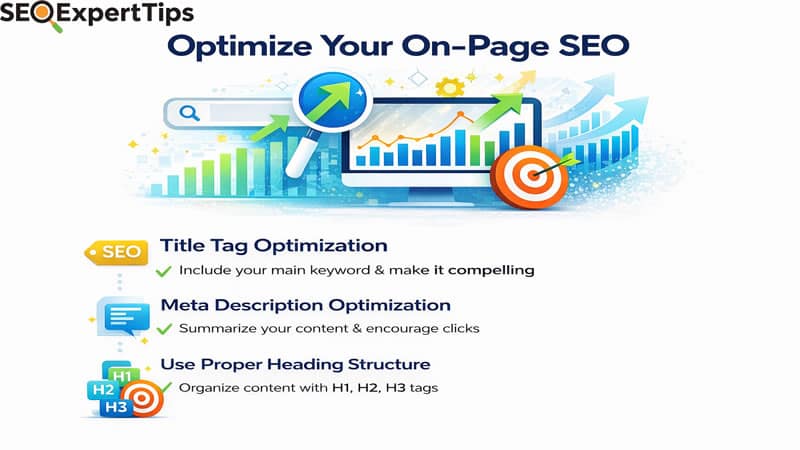
Meta Description Optimization
Meta descriptions appear under the title in search results and influence click-through rates.
Tips for writing effective meta descriptions:
- Keep them between 150–160 characters
- Include the main keyword naturally
- Write a persuasive text that encourages clicks
Use Proper Heading Structure
Headings help organize your content and make it easier to read.
Typical heading structure:
- H1 for the main title
- H2 for major sections
- H3 for subtopics
Well-structured content improves readability and helps search engines understand your page better.
Create High-Quality Content
Content quality is one of the most important ranking factors in SEO. Search engines aim to provide users with the most helpful and relevant information.
High-quality content should include:
- Clear explanations
- Actionable tips
- Useful examples
- Accurate information
- Updated insights
Tips for Creating SEO-Friendly Content
- Use your keyword naturally in the introduction
- Include related keywords throughout the article
- Break text into smaller paragraphs
- Use bullet points and lists
- Write content that answers user questions
Search engines prioritize content that provides real value to readers.
Improve Website Speed
Website speed plays a significant role in both user experience and SEO rankings. Slow websites frustrate visitors and increase bounce rates.
You can analyze your website speed using Google PageSpeed Insights.
Ways to improve website speed include:
- Compressing images
- Using browser caching
- Reducing unnecessary code
- Using a content delivery network (CDN)
- Choosing a fast-hosting provider
A faster website improves user satisfaction and search engine rankings.
Make Your Website Mobile Friendly
Most internet users access websites through smartphones and tablets. Because of this trend, Google uses mobile-first indexing.
This means the mobile version of your website is considered first when determining rankings.
Mobile optimization tips include:
- Use responsive design
- Ensure fast mobile loading speed
- Use readable fonts and proper spacing
- Avoid intrusive pop-ups
A mobile-friendly website improves both rankings and user experience.
Build High-Quality Backlinks
Backlinks are links from other websites pointing to your site. They act as signals of trust and authority.
When reputable websites link to your content, search engines view your website as more credible.
Common backlink strategies include:
- Guest blogging
- Creating valuable resources
- Outreach to bloggers and websites
- Broken link building
- Publishing original research
Quality backlinks help improve domain authority and search rankings.
Use Internal Linking
Internal links connect pages within your website. They help search engines crawl your content and understand your site structure.
Benefits of internal linking include:
- Improved website navigation
- Stronger SEO structure
- Better distribution of page authority
- Increased time spent on your site
For example, a blog post about SEO expert tips can link to related articles such as:
- Keyword research guide
- On-page SEO checklist
- Technical SEO strategies
- Link building techniques
Strategic internal linking strengthens your entire SEO strategy.
Optimize Technical SEO
Technical SEO focuses on the backend elements that help search engines crawl and index your website.
Important technical SEO elements include:
XML Sitemap
An XML sitemap lists all important pages on your website and helps search engines discover them easily.
Robots.txt File
This file tells search engines which pages they should crawl and which pages they should ignore.
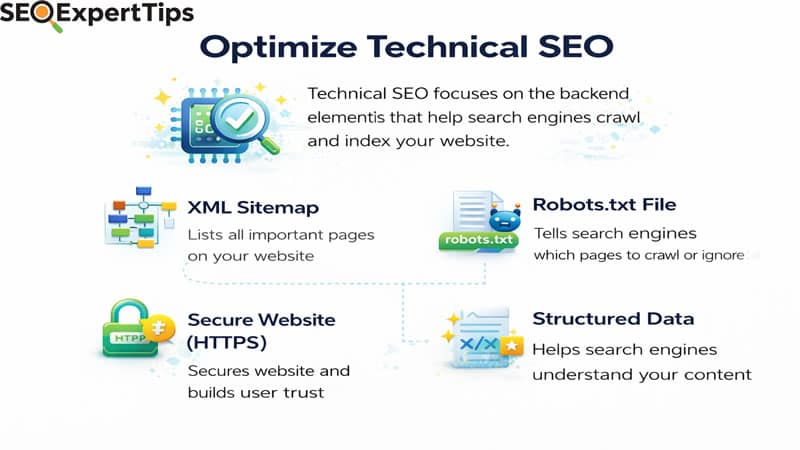
Secure Website (HTTPS)
Secure websites build trust and are favored by search engines.
Structured Data
Structured data helps search engines understand your content better and can enable rich results in search listings.
Monitor Your SEO Performance
SEO requires continuous monitoring and optimization. Tracking your performance helps you identify opportunities for improvement.
Essential SEO tools include:
- Google Analytics
- Google Search Console
These tools help track:
- Organic traffic
- Keyword rankings
- Click-through rates
- User behavior
- Website performance
Analyzing this data helps you refine your SEO strategy and achieve better results.
Read More: 5 Expert Tips for a Winning International SEO Strategy
Conclusion
SEO is essential for any website that wants to grow online. By implementing these SEO expert tips to improve your website rankings, you can increase organic traffic, improve user experience, and build long-term authority in your niche. Focus on keyword research, optimize your on-page SEO, create high-quality content, and build strong backlinks.
At the same time, ensure your website loads quickly and works well on mobile devices. SEO success does not happen overnight, but consistent effort leads to powerful long-term results. Start applying these strategies today, optimize your content regularly, and watch your website climb higher in search engine rankings.
Frequently Asked Questions
What are SEO expert tips for beginners?
Some effective SEO tips for beginners include conducting keyword research, optimizing title tags, creating high-quality content, improving website speed, and building backlinks. These strategies help websites rank higher on search engines.
How long does SEO take to work?
SEO is a long-term strategy. Most websites start seeing noticeable improvements within three to six months, depending on competition and optimization efforts.
What is the most important SEO factor?
High-quality content combined with relevant keywords and strong backlinks remains one of the most important ranking factors.
How can I increase website traffic with SEO?
You can increase traffic by targeting low-competition keywords, publishing helpful content regularly, improving technical SEO, and building quality backlinks.