
Ranking on Google is harder than ever. Millions of websites compete for the same keywords. Paid ads dominate the top positions. Algorithms change constantly. And users expect faster, smarter, and more helpful content. So, the big question every business owner and blogger asks is simple:
How do you boost SEO on Google in 2026 and actually reach the first page?
The truth is, SEO is no longer about tricks or shortcuts. It’s about strategy, quality, and consistency. Google now rewards websites that provide real value, fast performance, and trustworthy information. If you want long-term traffic, leads, and sales, learning how to boost SEO on Google the right way is essential. This guide will show you exactly how.
Read More: Content Marketing Strategy in 2026
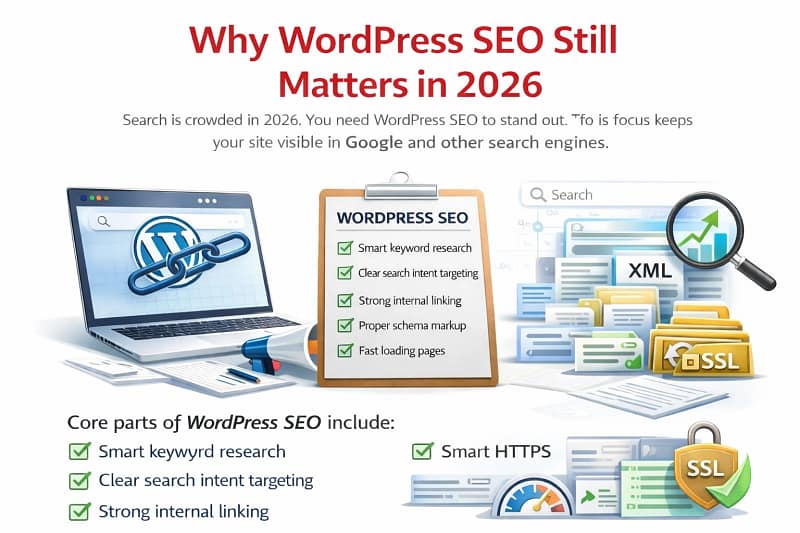
Why SEO Still Matters in 2026
Some people think SEO is dead.
It’s not.
In fact, SEO is more powerful today than ever before.
Here’s why:
- Over 90% of online experiences start with Google
- Users trust organic results more than ads
- Free traffic is more profitable than paid ads
- Ranking once can bring traffic for years
When you boost SEO on Google, you don’t just get visitors. You get targeted visitors who are already searching for what you offer.
That means higher conversions and better business growth.
Step 1: Understand Search Intent First
Before writing anything, ask:
What does the user actually want?
Google ranks pages based on intent, not just keywords.
There are four types of search intent:
- Informational – learning something
- Navigational – finding a site
- Transactional – buying
- Commercial – comparing
If someone searches:
“best fertilizer for wheat”
They want advice, not a sales page.
Matching intent correctly is the first step to boosting SEO on Google successfully.
Step 2: Smart Keyword Research (Your Traffic Foundation)
Keywords are the backbone of SEO.
Without them, your content stays invisible.
Use tools like:
- Google Keyword Planner
- Ahrefs
- SEMrush
- Ubersuggest

Find:
- High search volume
- Low competition
- Long-tail keywords
For example:
Instead of:
SEO tips
Use:
How to boost seo on Google fast
Long-tail keywords rank more easily and bring better traffic.
Place keywords naturally in:
- Title
- Headings
- Meta description
- Content
This helps search engines understand your page clearly.
Step 3: Create High-Quality Content (Google’s #1 Ranking Factor)
Content is still king.
But not short, low-quality content.
Google prefers:
- Detailed guides
- 1500+ words
- Clear explanations
- Real examples
- Helpful solutions
If your article fully solves the reader’s problem, Google will rank it higher.
To boost SEO on Google, focus on:
- Original content
- Easy language
- Structured headings
- Practical steps
- No copying
Think like a teacher, not a seller.
Read More: Keyword Research in 2026: How to Find Profitable Keywords That Rank Fast
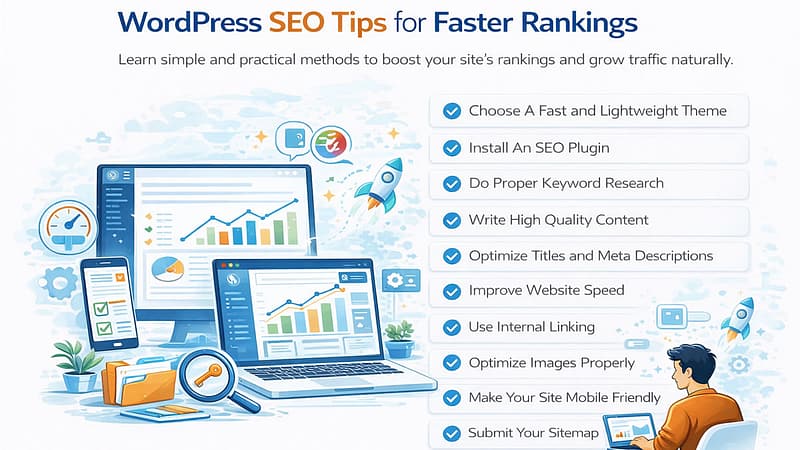
Step 4: Optimize On-Page SEO Properly
On-page SEO tells Google what your page is about.
Every page must include:
Title Tag
Include your focus keyword.
Example:
How to Boost SEO on Google in 2026
Meta Description
Short, clickable summary.
Headings (H1, H2, H3)
An organized structure helps both users and Google.
Internal Links
Link to your other posts.
Images with Alt Text
Describe images using keywords.
URL Structure
Keep short and clean:
yourwebsite.com/boost-seo-on-google
These small improvements massively boost SEO on Google.
Step 5: Improve Website Speed
Speed is now a ranking factor.
Slow websites lose visitors and rankings.
If your site loads slowly:
- Users leave
- Bounce rate increases
- Google lowers ranking
Fix by:
- Compressing images
- Using fast hosting
- Enabling caching
- Reducing plugins
- Using CDN
Fast websites rank better and convert better.
Step 6: Mobile Optimization is Mandatory
More than 70% of users browse on mobile.
Google uses mobile-first indexing.
If your website isn’t mobile-friendly, you will never fully boost SEO on Google.
Make sure:
- Responsive design
- Readable text
- Fast loading
- Easy navigation
Test with:
Google Mobile-Friendly Test
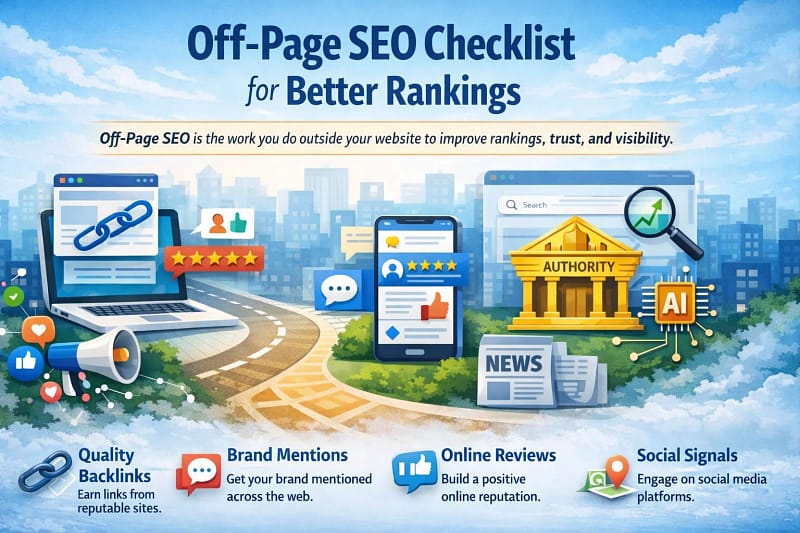
Step 7: Build High-Quality Backlinks
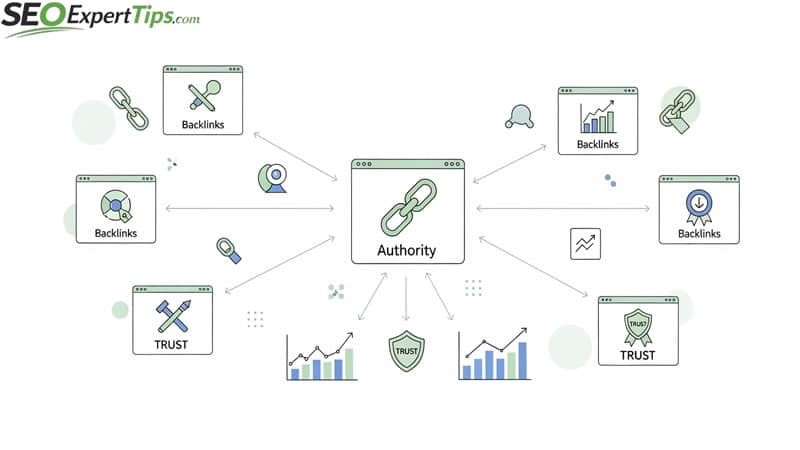
Backlinks act like votes.
More quality links = more trust.
But remember:
Quality > Quantity
Good ways to earn links:
- Guest blogging
- Helpful guides
- Infographics
- Case studies
- Shareable content
Avoid spammy links. They harm rankings.
Backlinks remain one of the strongest ways to boost SEO on Google.
Step 8: Use Content Marketing Strategy
Publishing one article isn’t enough.
SEO needs consistency.
Create:
- Weekly blog posts
- Tutorials
- FAQs
- How-to guides
- Videos
The more helpful content you publish, the more chances you have to rank.
Content Marketing + SEO = powerful growth engine.
This is the smartest long-term way to boost SEO on Google.
Step 9: Optimize for Featured Snippets
Featured snippets appear at the top of Google.
They get huge clicks.
To rank there:
- Use question headings
- Add short answers (40–60 words)
- Use lists and tables
- Add FAQs
Google loves structured answers.
This can instantly boost your visibility.
Step 10: Track and Improve Performance
SEO is not one-time work.
You must measure results.
Use:
- Google Analytics
- Google Search Console
Track:
- Traffic
- Keywords
- Clicks
- Bounce rate
- Rankings
Update old articles and improve weak pages.
Continuous improvement helps boost SEO on Google consistently.
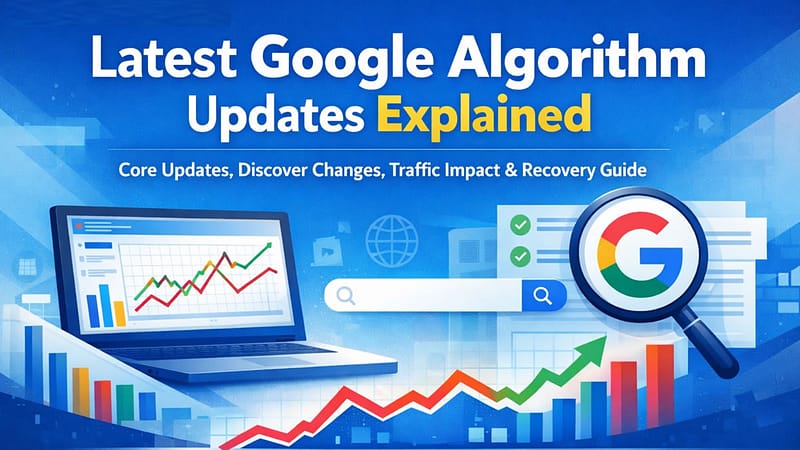
Read More: Google Algorithm Updates You Can’t Ignore in 2026
Common Mistakes to Avoid
Many beginners fail because they:
- Copy content
- Use too many keywords
- Ignore mobile
- Skip backlinks
- Post inconsistently
- Expect instant results
SEO takes time.
But once it works, the results last for years.
Final Thoughts
Learning how to boost SEO on Google in 2026 is not about hacks or shortcuts.
It’s about:
- Helpful content
- Smart keywords
- Technical optimization
- Fast performance
- Consistency
If you focus on solving real problems and providing value, Google will reward you with rankings.
Start today. Publish regularly. Optimize smartly.
Over time, your website will become a traffic machine that works for you 24/7.
Frequently Asked Questions (FAQs)
How long does SEO take?
Usually, 3–6 months for noticeable results.
Is SEO free?
Mostly yes. It costs time, not ads.
What is the fastest way to rank?
Target long-tail keywords with high-quality content.
Can beginners boost SEO on Google?
Yes. With the right strategy and consistency.