If you have a website, blog, or online business, you probably want people to find it on Google. However, millions of websites compete for attention, and without the right strategy, your content may never appear in search results. This is where Search Engine Optimization (SEO) becomes important. SEO is the process of improving your website so search engines like Google can understand it and rank it higher in search results.
When your site ranks higher, more people visit your website, which can lead to more customers, readers, or clients. This SEO guide for beginners will teach you the fundamentals of SEO, including how search engines work, keyword research, on-page SEO, link building, and practical strategies to improve your rankings.
By the end of this guide, you will understand how SEO works and how to start optimizing your website effectively.
What Is SEO? (Search Engine Optimization)
SEO stands for Search Engine Optimization, which is the process of improving a website so it appears higher in search engine results pages (SERPs). In simple terms, SEO helps search engines understand your website content and show it to people who are searching for related topics.
For example, if someone searches for “SEO guide for beginners”, Google tries to show the most helpful and relevant pages about SEO basics. Websites that are optimized for SEO are more likely to appear at the top of the results.
SEO usually focuses on three main areas:
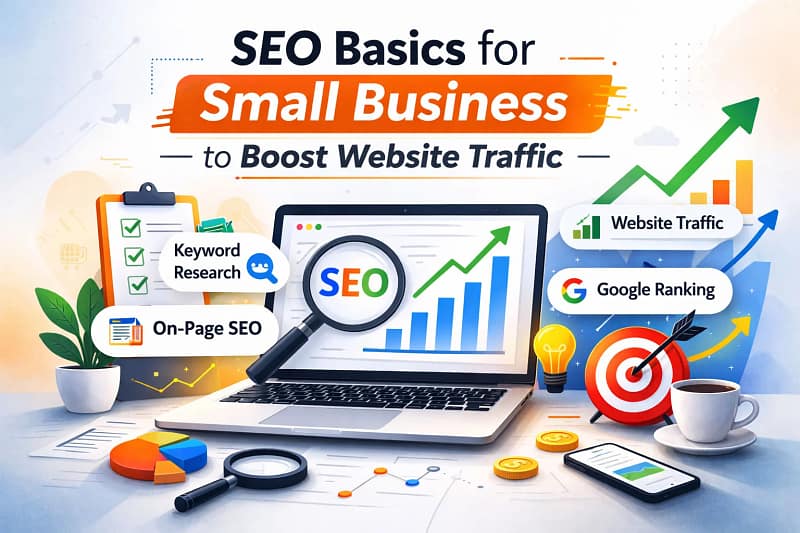
- On-page SEO: optimizing your content and website pages
- Off-page SEO: building backlinks and authority
- Technical SEO: improving website structure and performance
When these three areas work together, your website has a much better chance of ranking higher on search engines.
How Do Search Engines Work?
Search engines like Google use automated programs called crawlers or bots to explore the internet and index web pages. The process generally happens in three stages.
1. Crawling
Search engines discover web pages using bots that scan the internet and follow links from one page to another.
2. Indexing
After crawling, the search engine stores and organizes the page information in a massive database called an index.
3. Ranking
When someone searches for a query, the search engine analyzes the indexed pages and ranks them based on relevance, quality, and authority. Google uses hundreds of ranking factors to determine which pages appear at the top of search results.
Why Is SEO Important for Websites?
SEO is one of the most powerful digital marketing strategies because it brings organic traffic from search engines without paying for ads. Websites that rank higher in search results receive significantly more clicks and visitors.
Some key benefits of SEO include:
- Increased website traffic
- Higher credibility and trust
- Long-term marketing results
- Better user experience
- More potential customers or readers
Unlike paid advertising, SEO can continue bringing traffic for months or even years once your pages rank well.
Keyword Research: The Foundation of SEO
Keyword research is the process of finding the words and phrases people type into search engines. Choosing the right keywords helps you create content that matches what users are searching for.
For beginners, keyword research usually involves:
- Finding topics related to your niche
- Identifying search terms people use
- Choosing keywords with good search volume and low competition
Some popular keyword research tools include:
- Google Keyword Planner
- Ubersuggest
- Ahrefs
- SEMrush
- Google Trends
For example, if your website is about digital marketing, useful keywords might include SEO tips, SEO tools, or an SEO guide for beginners. Targeting the right keywords increases the chances that your content will appear in search results.
What Is On-Page SEO?
On-page SEO refers to optimizing elements on your website pages to help search engines understand your content. This type of SEO focuses on improving both content quality and HTML elements.
Important on-page SEO factors include:
Title Tags
The title tag is the clickable headline that appears in search results. It should include the main keyword and clearly describe the page.
Meta Descriptions
A meta description is a summary of the page that encourages users to click your link.
Headings (H1, H2, H3)
Headings help organize your content and make it easier for both users and search engines to understand.
Content Quality
High-quality content should be informative, well-structured, and helpful for readers.
Internal Linking
Linking to other pages on your website helps search engines discover more of your content. When these elements are optimized properly, your page becomes easier to rank in search results.
What Is Off-Page SEO?
Off-page SEO refers to actions taken outside your website to improve its authority and reputation. The most important factor in off-page SEO is backlinks. Backlinks are links from other websites pointing to your site. Search engines consider backlinks as a signal of trust and credibility.
Some common off-page SEO strategies include:
- Guest blogging on other websites
- Creating shareable content
- Social media promotion
- Influencer outreach
- Directory submissions
The more high-quality backlinks your website earns, the stronger your website’s authority becomes.
What Is Technical SEO?
Technical SEO focuses on improving the technical aspects of a website so search engines can crawl and index it efficiently.
Important technical SEO elements include:
Website Speed
Fast websites provide a better user experience and often rank higher in search results.
Mobile Friendliness
Most searches happen on mobile devices, so your website must be optimized for smartphones.
Secure Website (HTTPS)
Websites with HTTPS encryption are considered safer and more trustworthy.
XML Sitemap
An XML sitemap helps search engines discover and index important pages on your website.
Clean Website Structure
A clear site structure helps search engines understand how your pages are connected. Technical SEO ensures that your website is accessible, fast, and easy for search engines to process.
SEO Tips for Beginners
If you are just starting with SEO, focusing on simple strategies can produce good results over time.
Here are some beginner-friendly SEO tips:
- Focus on creating helpful, high-quality content
- Use keywords naturally in your headings and paragraphs
- Optimize titles and meta descriptions
- Improve website loading speed
- Build backlinks from reputable websites
- Use internal links between related pages
- Update old content regularly
SEO is not an instant process. It often takes weeks or months before rankings improve, but consistent optimization leads to long-term results.
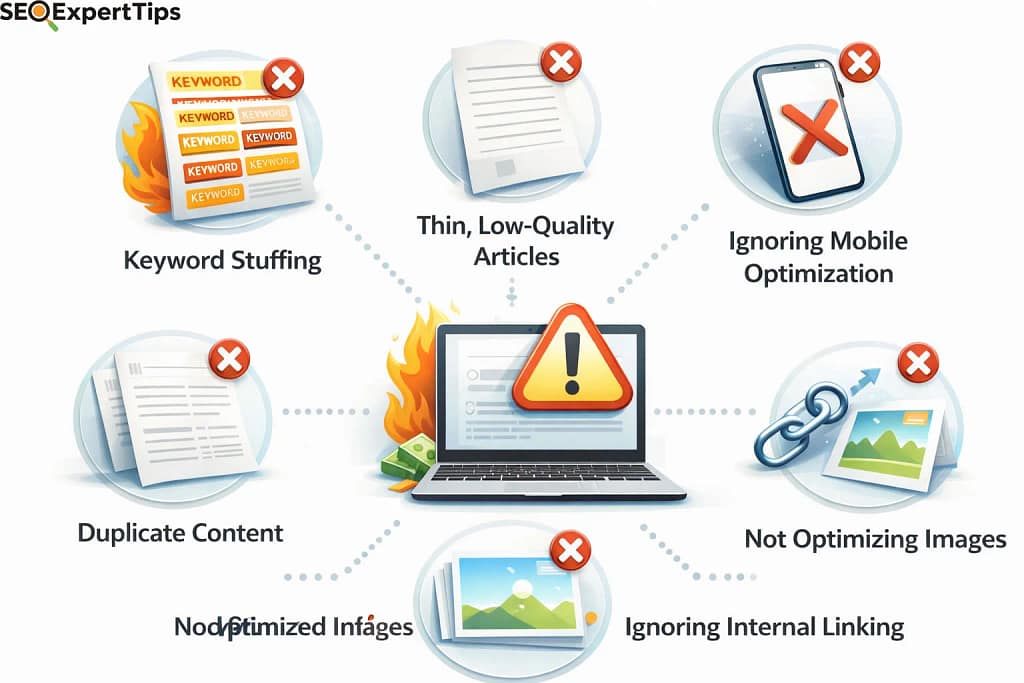
Common SEO Mistakes Beginners Should Avoid
Many beginners make mistakes that can slow down their SEO progress.
Some common mistakes include:
- Keyword stuffing in content
- Publishing thin or low-quality articles
- Ignoring mobile optimization
- Using duplicate content
- Not optimizing images
- Ignoring internal linking
Avoiding these mistakes helps ensure that your website follows SEO best practices.
The Future of SEO and AI Search
Search engines are becoming smarter with artificial intelligence and machine learning. Modern SEO strategies now focus more on user experience, content quality, and search intent rather than just keywords. Voice search, AI assistants, and answer engines are also influencing how people search for information. Because of these changes, websites that provide clear answers and helpful content are more likely to appear in featured snippets and AI-powered search results.
Frequently Asked Questions (FAQ)
What is SEO in simple words?
SEO is the process of improving a website so it ranks higher in search engine results and attracts more organic traffic.
How long does SEO take to work?
SEO usually takes 3 to 6 months to show noticeable results, depending on competition and content quality.
Is SEO difficult for beginners?
SEO can seem complex at first, but beginners can learn the basics quickly by focusing on keyword research, content optimization, and backlinks.
Do I need tools to do SEO?
SEO tools are helpful but not always necessary. Beginners can start using free tools like Google Search Console, Google Analytics, and Google Keyword Planner.
Is SEO better than paid ads?
SEO provides long-term organic traffic, while paid ads bring quick but temporary traffic. Many businesses use both strategies together.