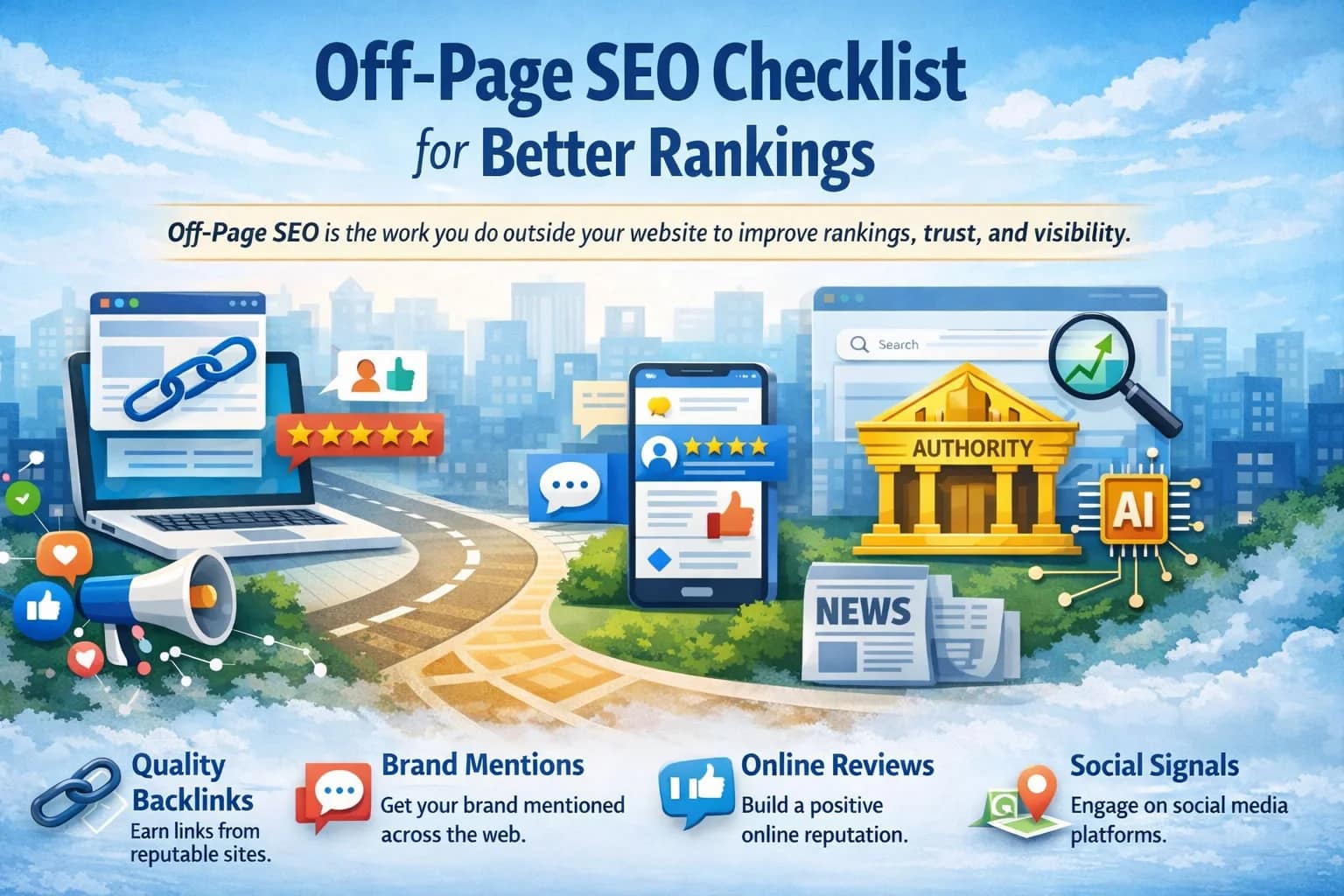
Off-Page SEO is the work you do outside your website to improve rankings, trust, and visibility. It focuses on backlinks, brand mentions, reviews, and authority signals that search engines use to judge credibility. Strong Off-Page SEO helps pages rank higher and appear in AI-driven search results.
When I talk about Off-Page SEO, I mean actions that happen beyond your site. These actions tell search engines your content deserves attention. Think of it like word-of-mouth for the web. If trusted sites mention you, search engines pay attention. Backlinks remain a core part of Off-Page SEO.
A backlink is a link from another website to yours. When respected sites link to you, your authority grows. That authority can improve your search rankings. But links are not the only signal. Brand mentions, online reviews, and social discussions also matter. Search engines track signals tied to E-E-A-T experience, expertise, authority, and trust.
Here’s what strong Off-Page SEO usually includes:
- Quality link building
- Earned brand mentions
- Positive online reputation
- Smart social media strategy
- Local signals like Google Business Profile
If your on-page work builds the house, Off-Page SEO builds the street around it. And a strong street makes the house easier to find.
12 Types of SEO Explained for Small Businesses
Off-Page SEO Vs On-Page SEO Differences
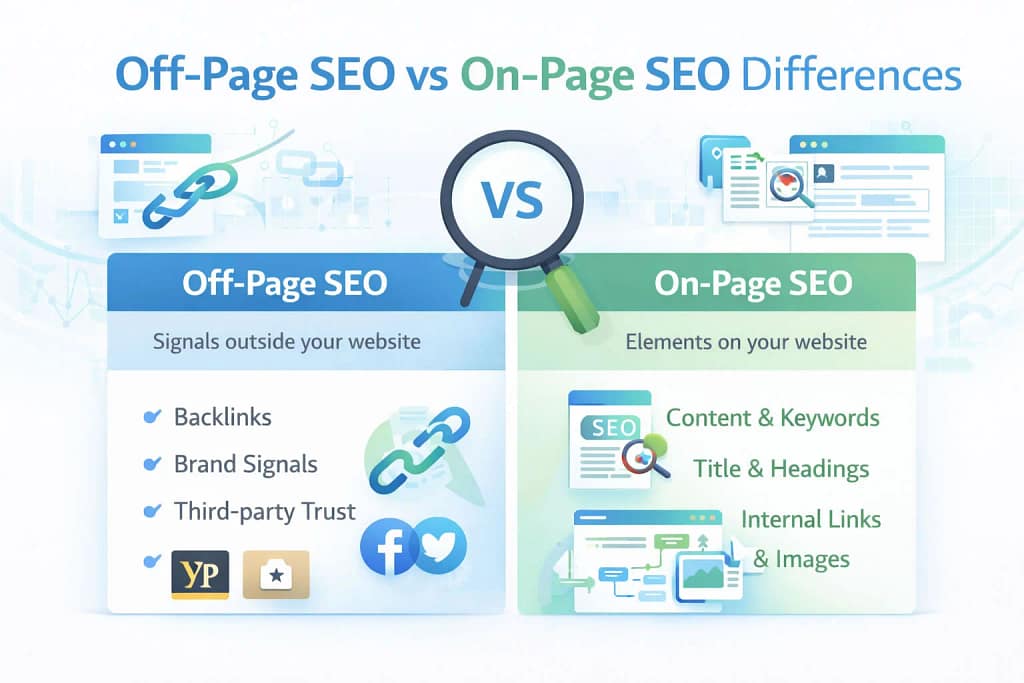
Off-page SEO focuses on signals outside your website, while on-page SEO focuses on elements within your website. Both work together to increase rankings, authority, and visibility. Off-Page SEO builds trust, and on-page SEO builds relevance.
I see many people confusing these two. Let me make it simple. On-page SEO is what you control directly. You adjust titles, headings, content, internal links, and images. Off-Page SEO, on the other hand, happens outside your domain. It involves backlinks, brand signals, and third-party trust factors. You influence it, but you don’t fully control it.
Here’s the difference in plain terms:
- On-page SEO improves content, keywords, and structure
- Off-Page SEO improves authority and reputation
- On-page SEO helps search engines understand you
- Off-Page SEO helps search engines trust you
Think of it like a resume. Your skills are on-page. Your references are Off-Page SEO. You can write the best content in your niche. But without strong link building, it may never rank. That’s why smart marketers combine both. When I build a strategy, I never treat them as rivals. They are partners. One builds the foundation. The other builds credibility. And without credibility, rankings rarely last.
Backlink Audit and Competitor Analysis Checklist
A backlink audit checks the quality and strength of links pointing to your website. It helps you remove harmful links and find new link-building opportunities. A clean backlink profile improves Off-Page SEO performance. I start every Off-Page SEO plan with a backlink audit. You need to know what’s helping you and what’s hurting you. Not all links are good.
Look at your backlink profile and review:
- Total referring domains
- Link quality and relevance
- Anchor text variety
- Follow vs nofollow links
- Spam or toxic signals
Low-quality links can weaken your Off-Page SEO. Remove or disavow harmful ones. Keep strong, relevant links. Next, study competitors. Check their link-building strategies. See which pages earn the most backlinks.
Those pages often contain:
- Research data
- Guides
- Tools
- Visual content
This step gives direction. If competitors earn links from industry blogs, you should aim for similar sites. A strong Off-Page SEO checklist always includes competitor analysis. It saves time and shows what already works in your niche. You’re not guessing. You’re learning from proven results.
Latest Google Algorithm Updates Explained
How to Build High-Quality Backlinks
High-quality backlinks come from trusted, relevant websites with strong authority. These links improve Off-Page SEO by increasing credibility and ranking strength. Quality matters more than quantity in link building. When I focus on Off-Page SEO, I focus on link quality. Ten strong links beat one hundred weak ones. Search engines look at the source.
Here are reliable link-building methods:
- Guest posting on industry sites
- Digital PR campaigns
- Broken link building
- Resource page outreach
- Expert quotes in the media
Guest posts still work when done right. Write helpful content. Avoid spammy networks. Aim for relevance. Broken link building is another smart tactic. Find broken links on authority sites. Offer your content as a replacement. It helps both sides.
Digital PR earns links through stories, surveys, and reports. Data-backed content attracts attention. Journalists often link to research. Also, focus on anchor text diversity. Avoid repeating the same keyword in every link. Keep it natural. Strong Off-Page SEO takes patience. Links don’t appear overnight. But steady work builds authority like bricks stacking up. And each brick makes your rankings stronger.
Brand Mentions and Online Reputation Signals
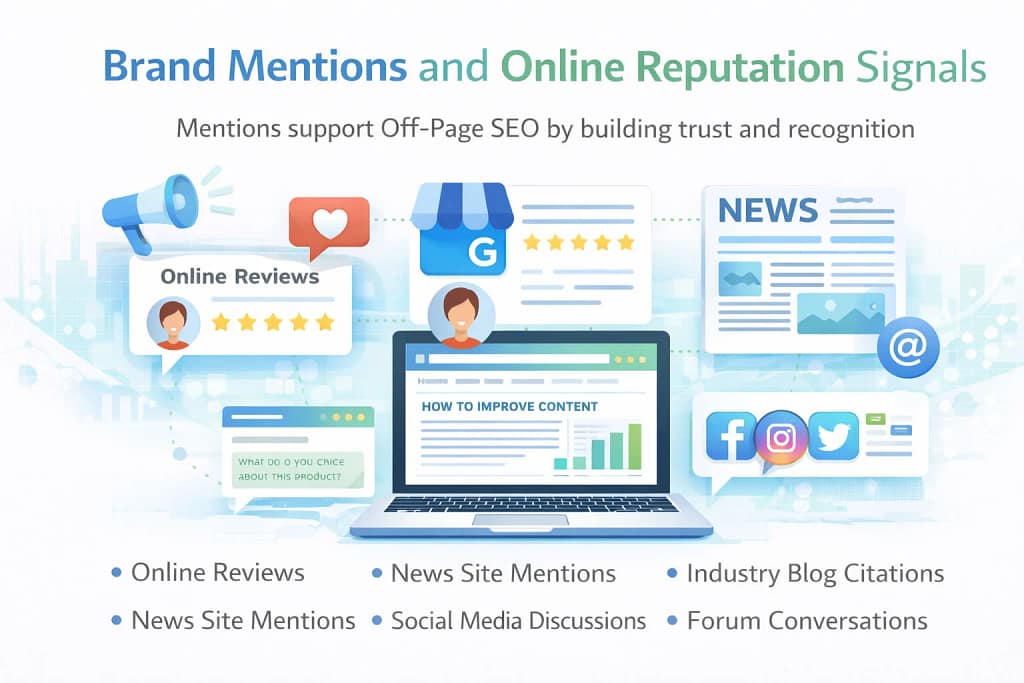
Brand mentions and reputation signals support Off-Page SEO by building trust and recognition. Search engines track how often and where your brand appears across the web. Strong mentions improve authority and visibility.
Links are powerful. But mentions also matter. Even when a site doesn’t link to you, your brand name sends signals. In Off-Page SEO, these are called brand signals. Search engines scan reviews, news articles, blogs, and forums.
Key areas to monitor:
- Online reviews
- News site mentions
- Industry blog citations
- Social media discussions
- Forum conversations
Positive reviews help local businesses. They improve Google Business Profile visibility and trust. If people talk about your brand often, search engines see you as established. That helps your E-E-A-T profile.
You can encourage mentions through:
- Public relations outreach
- Expert interviews
- Podcast appearances
- Community participation
Think of reputation as your digital shadow. It follows you everywhere. Strong Off-Page SEO makes sure that the shadow looks clean and credible. And credibility drives rankings.
Social Media and Content Promotion Strategy
Social media supports Off-Page SEO by increasing content visibility and brand awareness. While social signals do not directly pass link value, they help attract backlinks and brand searches. I use social platforms as amplifiers. They spread content beyond my website. That exposure increases the chance of earning backlinks. Share new content across platforms where your audience lives. Focus on value, not constant promotion.
Effective tactics include:
- Sharing blog posts
- Posting short insights
- Repurposing guides into videos
- Running Q&A sessions
- Encouraging user interaction
More eyes mean more opportunities. Journalists, bloggers, and creators often discover content through social media. When content spreads, branded searches increase. And branded searches strengthen Off-Page SEO signals. But keep it natural. Avoid spam posting. Engage with comments. Build community trust. Social media works like a loudspeaker. It doesn’t replace link building, but it supports it. And support makes growth steady.
WordPress SEO Tips for Faster Rankings
Local SEO and Citation Building
Local citation building improves Off-Page SEO for businesses targeting specific regions. Consistent listings across directories strengthen trust and help local search rankings. If you serve a local market, your Off-Page SEO checklist must include citations. A citation lists your business name, address, and phone number. Consistency is key. Search engines compare data across platforms.
Important citation sources include:
- Google Business Profile
- Yelp
- Industry directories
- Local chamber websites
Make sure your NAP details match exactly. Small differences can weaken trust signals. Encourage satisfied customers to leave reviews. Reviews support both reputation and Off-Page SEO. Respond to feedback quickly. That shows activity and care. Local links also matter.
Partner with nearby businesses. Sponsor community content. Earn links from regional blogs. Local Off-Page SEO works like neighborhood trust. When local sites mention you, visibility grows. And local visibility often converts faster than broad traffic.
Advanced Off-Page SEO and AI Search Signals
Advanced Off-Page SEO focuses on authority, expert citations, and AI-driven visibility signals. Strong external trust improves rankings in both traditional and AI-based search systems. Search is changing. AI tools now summarize content and cite trusted sources. That makes strong Off-Page SEO even more important.
AI systems rely on:
- High-authority domains
- Expert mentions
- Research-backed content
- Trusted backlinks
If your brand appears in respected publications, AI tools are more likely to reference you.
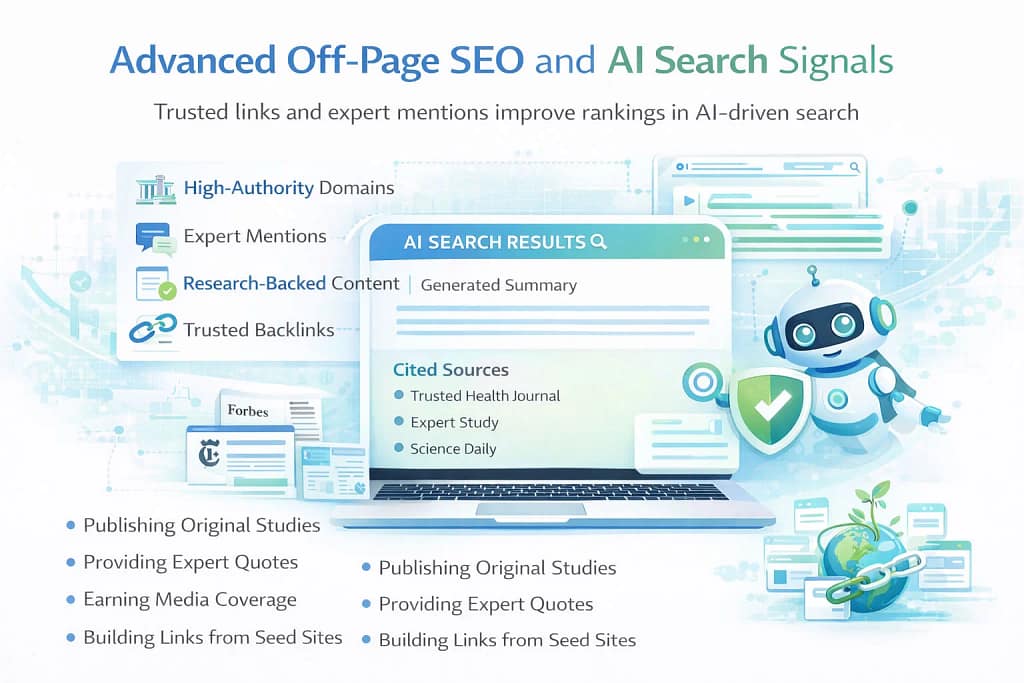
To strengthen advanced Off-Page SEO, focus on:
- Publishing original studies
- Providing expert quotes
- Earning media coverage
- Building links from seed sites
Think of it as building a digital reputation portfolio. The more trusted voices mention you, the stronger your presence becomes. In the end, Off-Page SEO is about credibility. And credibility is currency in modern search. Build it slowly. Protect it carefully. And watch your rankings grow steadily over time.
Technical SEO Tips for Better Rankings
Final Thoughts on Your Off-Page SEO Checklist
Strong rankings don’t happen by luck. They grow when trust builds outside your website. That’s the real purpose of Off-Page SEO. It strengthens your authority through backlinks, brand mentions, reviews, and other external signals that search engines use to judge credibility.
Throughout this guide, you’ve seen that Off-Page SEO goes beyond simple link building. Yes, high-quality backlinks remain important. But search engines also measure your online reputation, social discussions, and signals connected to E-E-A-T experience, expertise, authority, and trust.
A strong Off-Page SEO checklist should always include:
- Regular backlink audit
- Competitor link-building strategies review
- Focus on relevant, high-authority referring domains
- Monitoring brand mentions
- Managing online reviews
- Strengthening local signals through Google Business Profile
Cleaning your backlink profile protects your authority. Studying competitors gives direction. Earning links from trusted sites increases ranking strength over time. Brand visibility also matters. When people mention your business on blogs, forums, and news sites, your brand signals grow.
Positive reviews and consistent business listings improve trust, especially in local search. Social media adds fuel to the process. It spreads your content, increases branded searches, and creates opportunities for natural backlinks. While social signals do not directly pass link value, they support your overall Off-Page SEO growth.
In the end, Off-Page SEO is about building trust beyond your website. It takes patience and steady effort. Focus on quality, relevance, and credibility. When authority grows, rankings become stronger, more stable, and easier to maintain over time.
Frequently Asked Questions (FAQs)
Q: What Is Off-Page SEO?
Off-Page SEO is the work done outside your website to improve rankings, authority, and trust. It includes backlinks, brand mentions, online reviews, and reputation signals that search engines use to measure credibility and visibility.
Q: Why Are Backlinks Important In Off-Page SEO?
Backlinks act as trust signals from other websites. When relevant and authoritative sites link to you, your domain authority increases, which strengthens your Off-Page SEO and improves search rankings.
Q: How Often Should I Audit My Backlink Profile?
You should review your backlink profile at least once every few months. Regular audits help remove harmful links, maintain link quality, and protect your Off-Page SEO performance.
Q: Do Brand Mentions Help Off-Page SEO Without Links?
Yes, brand mentions still support Off-Page SEO. Even without a direct link, mentions across news sites, blogs, and forums build authority, strengthen E-E-A-T, and improve trust signals.
Q: How Does Local SEO Support Off-Page SEO?
Local SEO improves Off-Page SEO through consistent citations, positive reviews, and a well-optimized Google Business Profile. These signals increase local trust, improve visibility, and support higher rankings in local search results.