On-Page SEO is the base of every strong website. It helps search engines understand your content in a clear way. If search engines cannot read your page well, they will not rank it. That is why On-Page SEO matters so much. Many people focus only on backlinks or tools. But they forget the page itself. Your page is the first thing users see. It must be clean and helpful. It must load fast. It must answer questions. This is what On-Page SEO improves.
On-Page SEO includes many small actions. These actions work together. They improve titles, headings, content, links, and images. They also improve user experience. When everything works well, rankings improve slowly and safely. Search engines like pages that are simple. They like clear structure. They like useful content. They do not like messy design or hard text. So your goal is to keep things easy and clean.
If you follow proper On-Page SEO steps, your site becomes stronger. Users stay longer. Bounce rate drops. Traffic grows. This guide explains each step in simple language. Anyone can apply these methods without advanced skills. Think of On-Page SEO like building a house. If the base is weak, the house falls. If the base is strong, the house stands for years. Your website is the same. Strong pages create strong rankings.
Understanding Search Intent and Keywords
On-Page SEO starts with keywords. Keywords show what users search for. If you use the right keywords, you reach the right people. If you use the wrong words, you get no traffic. Search intent is also important. Intent means the reason behind a search. Some users want information. Some want to buy. Some want to compare. Your content must match this need.
For example, if someone searches best shoes, they want options. If someone searches for shoes online, they want to purchase. Your page must match the goal. This is smart On-Page SEO. Start by finding simple keywords. Use tools like Google search suggestions. Look at what people type. Choose words with clear meaning. Avoid very hard or broad terms at first.

After selecting keywords, place them naturally. Do not force them. Add them to the title. Add them in headings. Add them in the first paragraph. Keep the flow smooth. Also, use related words. These are called secondary keywords. They help search engines understand the topic better. They also make your writing look natural.
Good keyword research saves time. It guides your content. It helps you write what people actually want. This makes On-Page SEO more effective and more focused. When your keywords match user intent, traffic increases. People find your page helpful. They stay longer. Search engines see this behavior and reward your page with better rankings.
Writing High Quality and Useful Content
Content is the heart of On-Page SEO. Without strong content, nothing works. Search engines rank pages that help users. They do not rank pages with thin or copied text. Good content answers questions. It solves problems. It explains ideas clearly. Use short sentences. Use simple words. Make every line easy to read. This keeps visitors engaged.
Do not write long, complex sentences. They confuse readers. Keep ideas short. Break text into small paragraphs. This improves readability. Users prefer content that looks light and clean. Always write for humans first. Do not write only for search engines. If people enjoy your content, search engines will notice. Time On-Page increases. This is a good ranking signal.
Add examples when possible. Examples make ideas clear. They help beginners understand faster. Clear explanations improve trust. Trust builds authority for your site. Avoid duplicate content. Each page should be unique. Copying from other sites harms rankings. Search engines prefer original content. Unique text improves your On-Page SEO score.
Update your content often. Add new facts. Fix old information. Fresh content stays relevant. Search engines like updated pages. They crawl them more often. When your content is helpful and clear, users come back again. This builds loyalty. Loyal visitors share your page. Sharing brings more traffic. This is how strong On-Page SEO grows naturally.
Read More: Technical SEO Tips for Better Rankings
Creating Strong Titles and Meta Descriptions
Titles are very important in On-Page SEO. The title is the first thing users see in search results. It decides if they click your link or skip it. A strong title increases traffic. Your title should include your main keyword. Place it near the start. Keep the title short and clear. Long titles get cut off. Around sixty characters is a good length.
Use simple words. Avoid complex phrases. Make the title direct. Tell users what they will get. Clear titles build trust. Trust increases clicks. Meta descriptions also help. They are short summaries below the title. They explain what your page is about. A good description improves click rate.
Keep the description around one hundred fifty characters. Add your focus keyword naturally. Write in a friendly tone. Make users curious to read more. Do not stuff keywords. Too many keywords look spammy. Search engines may ignore your page. Keep the text natural and readable.
Every page should have a unique title and description. Do not copy the same text across many pages. Unique text helps search engines understand each page better. Strong titles and descriptions act like ads. They attract users. More clicks mean more traffic. More traffic improves signals. These signals help your On-Page SEO grow steadily.
Using Proper Headings and On-Page Structure
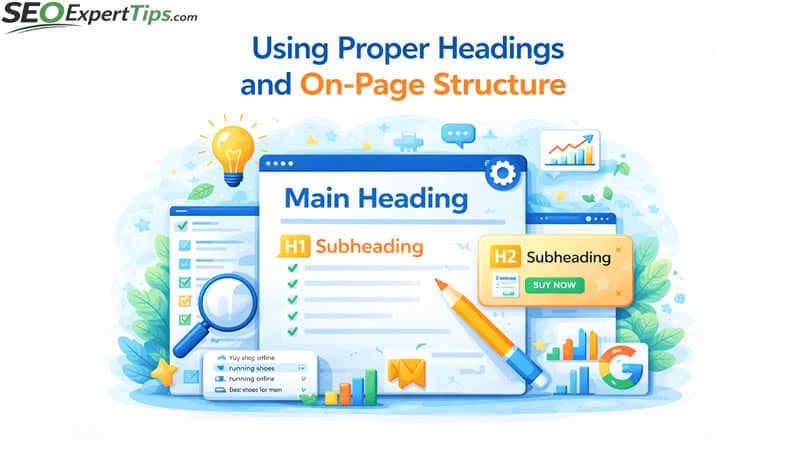
Headings guide both users and search engines. They show the structure of your content. A clear structure improves On-Page SEO and makes reading easier. Use one main heading at the top. This is your primary heading. It tells the topic of the page. After that, use smaller headings for sections and topics.
Do not skip heading levels. Follow a logical order. This helps search engines understand relationships between ideas. Good structure improves crawling. Headings should include keywords when possible. But keep them natural. Never force keywords. Forced text looks strange and hurts readability.
Break long content into sections. Large blocks of text scare readers. Smaller sections look friendly. Readers feel comfortable and stay longer. Use headings to answer common questions. This improves clarity. It also helps your page appear in featured results. Search engines like clear answers.
Also, keep sentences short under each heading. Short lines are easy to scan. Many users skim instead of reading deeply. Simple layout supports this behavior. Good structure helps both humans and bots. It improves time On-Page and reduces bounce rate. These signals tell search engines that your content is useful. This strengthens your On-Page SEO performance.
Optimizing URLs for Clarity and Ranking
URLs are small but powerful in On-Page SEO. A clean URL looks professional. It also helps users understand what the page is about before clicking. Keep URLs short and simple. Remove extra words. Avoid long numbers or strange symbols. Clear URLs are easier to remember and share.
Add your main keyword in the URL. This helps search engines understand the topic. But do not repeat it many times. One clear use is enough. Use words that describe the content. For example, use On-Page SEO tips instead of random letters. Descriptive URLs improve trust.
Avoid using special characters. They can break links. Stick to letters and spaces converted to simple separators. Clean URLs work best. Do not change URLs often. Changing them can break existing links. Broken links hurt user experience and reduce rankings. Plan your structure early.
Every page should have a unique URL. Duplicate URLs confuse search engines. Unique addresses improve indexing and visibility. Simple URLs make navigation easy. Users can guess where they are on your site. Good navigation improves satisfaction. Happy users stay longer. This helps your On-Page SEO results over time.
Improving Internal Linking Strategy
Internal links connect pages within your website. They are a key part of On-Page SEO. They guide users and search engines to related content. When you link pages together, search engines discover them faster. This improves crawling. Faster crawling means faster indexing. Internal links also pass value between pages. Strong pages help weaker pages rank better. This spreads authority across your site.
Use links naturally inside your text. Do not add too many at once. Too many links confuse users. Keep only useful ones. Use clear words for anchor text. Anchor text tells users what they will see next. Clear text improves clicks and readability. Link to important pages often. This shows search engines that these pages matter. Important pages should receive more links.
Also, update old articles with new links. This keeps your site fresh and connected. Connected content improves navigation. Good internal linking reduces bounce rate. Users explore more pages. More time on the site shows quality. Search engines reward this behavior. This makes your On-Page SEO stronger and more effective.
Read More: 15 Powerful Off-Page SEO Tips to Rank #1 on Google
Optimizing Images and Media Files
Images make content more attractive. They improve user experience. But large images can slow down your site. Slow pages harm On-Page SEO. Always compress images before uploading. Smaller files load faster. Faster pages keep users happy. Speed is a ranking factor. Use clear file names. Instead of image one, use the On-Page seo guide image. Descriptive names help search engines understand the image.
Add alt text for every image. Alt text describes the image. It helps search engines and visually impaired users. It also improves accessibility. Keep alt text short and natural. Add keywords only when relevant. Do not stuff keywords. Keep it simple. Choose proper formats. Use light formats for photos. Use simple graphics for icons. Correct format saves space.
Avoid too many heavy videos or animations. They slow loading time. Use media only when it adds value. Well-optimized images improve speed and accessibility. Better speed improves rankings. Better accessibility improves trust. These benefits together strengthen your On-Page SEO performance.
Enhancing User Experience and Page Speed
User experience is very important in On-Page SEO. If users feel comfortable, they stay longer. If they feel confused, they leave fast. Page speed plays a big role. Slow pages make users angry. Many leave within seconds. High bounce rate hurts rankings. Keep your design clean. Avoid clutter. Use enough space between sections.
Clean layout improves readability. Make navigation simple. Users should find information quickly. Complicated menus cause frustration. Simple menus work better. Use readable fonts. Do not use very small text. Clear text reduces strain. Happy users stay longer. Check speed using free tools.
Fix the issues they show. Remove unnecessary scripts. Reduce heavy files. Every small fix helps. Good experience builds trust. Trust leads to repeat visits. Repeat visits improve signals. Strong signals help search engines rank your site higher. This is how smart On-Page SEO creates lasting growth.
Adding Schema and Structured Data
Schema is extra code that helps search engines understand content better. It is a smart part of On-Page SEO. It gives more details about your page. With schema, search engines can show rich results. These include ratings, questions, or lists. Rich results attract more clicks. More clicks mean more traffic. More traffic improves visibility. This helps rankings over time.
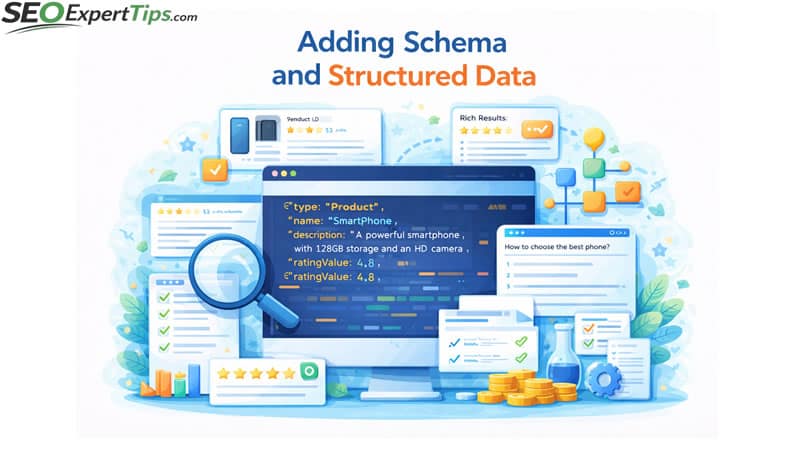
Use a schema for articles, products, or questions. Add only relevant types. Too many schemas can confuse search engines. Keep the code clean. Test it using online tools. Fix errors quickly. Correct code works best. Structured data does not change how your page looks. It works behind the scenes.
But it gives strong benefits. It helps search engines understand context. Better understanding means better ranking chances. Schema improves click rate and clarity. Clear pages get more trust. Trusted pages rank better. This makes structured data a useful tool in your On-Page SEO strategy.
Monitoring Performance and Continuous Improvement
On-Page SEO is not a one-time task. It needs regular checks. Websites change. Search engines change. You must update often. Use tools to track performance. Watch traffic and rankings. Check which pages do well. Improve weak pages. Fix errors quickly. Broken links or slow pages reduce quality. Small issues can grow big if ignored.
Update old content. Add new facts. Remove outdated parts. Fresh pages perform better. Test different titles and layouts. See what users like. Data helps you make smart decisions. Keep learning new methods. SEO keeps evolving. Staying updated keeps you ahead of competitors. Regular improvement builds strength. Strong pages rank higher. Higher ranks bring more traffic. More traffic brings growth. Continuous work is the final key to lasting On-Page SEO success.
SEOExpertTips: Conclusion
On-Page SEO is the foundation of every successful website. Without it, even the best content may never reach users. Search engines must first understand your pages before they can rank them. Good On-Page SEO makes your website clear, fast, and useful. It improves titles, headings, content, links, images, and structure. These small improvements work together to create strong results.
When your pages are simple and helpful, users stay longer. They read more. They trust your site. Search engines notice this behavior and reward you with better rankings. On-Page SEO is not about tricks or shortcuts. It is about quality and clarity. It is about giving users exactly what they need in the easiest way possible.
If you apply these techniques step by step, your website will grow steadily. Traffic will increase. Engagement will improve. Rankings will become stronger over time. In the end, consistent effort is the key. Keep optimizing. Keep updating. Keep improving. Strong On-Page SEO today builds lasting success for the future.
Frequently Asked Questions
What is On-Page SEO in Simple Words?
On-Page SEO means improving the content and elements inside your website pages. It helps search engines understand what your page is about. It also helps users read and navigate easily. When your page is clear and useful, search engines rank it higher. Good On-Page SEO improves both visibility and user experience.
Why is On-Page SEO Important for Rankings?
On-Page SEO helps search engines crawl and understand your content correctly. If your pages are not optimized, they may not appear in search results. Proper optimization improves relevance, speed, and readability. These factors help increase rankings. Without On-Page SEO, even good content may fail to rank.
What are the Most Important Parts of On-Page SEO?
The most important parts include keyword use, quality content, clear headings, optimized titles, internal links, image optimization, and fast page speed. All these elements work together. When they are properly set, your website becomes easier to understand. This improves both rankings and user satisfaction.
How Long Does On-Page SEO Take to Show Results?
On-Page SEO does not give instant results. It takes time and consistency. Search engines need time to crawl and update rankings. In most cases, improvements appear within a few weeks or months. Regular updates and better content help speed up progress.
Can I Rank Without On-Page SEO?
Ranking without On-Page SEO is very difficult. Search engines rely On-Page structure and content signals. If your pages are not optimized, they may not perform well. On-Page SEO creates the base for all other SEO efforts. It is necessary for long term success.