Digital business has entered a new era. Customers are more informed, competition is stronger, and traditional advertising is losing effectiveness. People skip commercials, ignore banners, and scroll past promotional posts without hesitation. This shift has forced brands to rethink how they communicate with their audience.
Unlock the full potential of your online presence with SEOExpertTips, where innovation meets optimization. In today’s digital landscape, visibility is paramount, and our tailored SEO solutions are designed to ensure your brand stands out brightly amidst the competition.
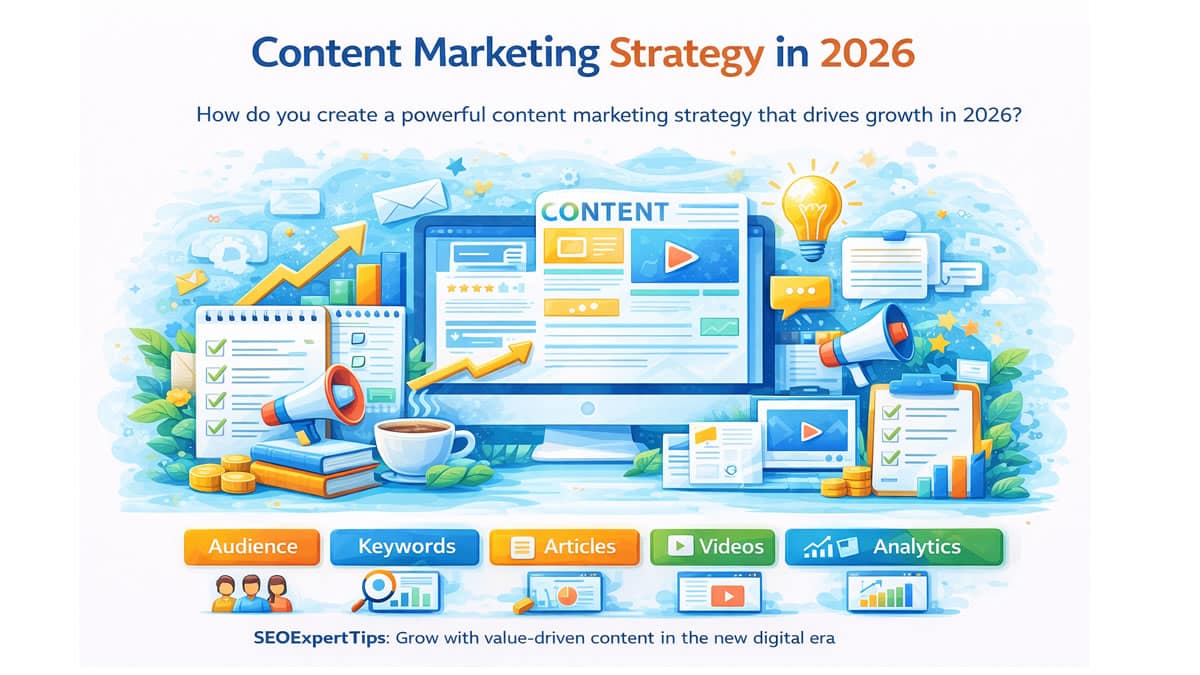
One strategy continues to outperform every other method, even as technology and platforms evolve. That strategy is Content Marketing. In 2026, businesses that educate and provide value consistently are the ones that dominate search engines, build trust faster, and generate sustainable revenue.
Instead of chasing customers with ads, they attract them naturally through helpful information. If you want long-term growth instead of short-term spikes, you need a structured Content Marketing strategy. This guide explains how to build one step by step and turn your content into a powerful business asset.
Understanding Content Marketing in Today’s Digital Landscape
Content Marketing is the practice of creating and distributing useful, relevant, and consistent content to attract a clearly defined audience. Rather than selling directly, the focus is on solving problems and answering questions. This approach aligns perfectly with how modern consumers behave.
When people need something, they search online. They read blogs, watch tutorials, and compare guides before making decisions. Businesses that provide those answers become trusted sources. Trust is the foundation of every sale. That is why Content Marketing continues to be the most reliable growth engine for digital businesses.
Why 2026 Demands a Stronger Strategy
The importance of Content Marketing has increased due to several major changes in the digital ecosystem. First, advertising costs have risen dramatically. Pay-per-click campaigns are more expensive, making it difficult for small and medium-sized businesses to compete.
Second, customers have developed ad fatigue. Constant exposure to promotions has reduced their effectiveness. People prefer authentic information over sales messages. Third, search engines now prioritize helpful, high-quality content. Websites that genuinely educate users rank higher than those that simply promote products.
Finally, AI and automation tools have made content creation faster and more scalable. Businesses can now produce better material with fewer resources. All these factors make Content Marketing not just useful, but essential.
The Core Philosophy: Value Before Selling
The most successful brands follow a simple rule: help first, sell later. Traditional marketing pushes products immediately. Content Marketing builds relationships first. When you consistently provide useful advice, people begin to trust your expertise. When they finally need a solution, they choose you naturally.

This approach leads to:
- Higher credibility
- Stronger customer loyalty
- Better conversion rates
- Long-term revenue
Sales become a result of trust rather than pressure.
Setting Clear Goals for Your Strategy
Before creating any content, you must define what success looks like. A structured Content Marketing plan should support measurable goals.
Common objectives include:
- Increasing organic traffic
- Generating qualified leads
- Improving search rankings
- Building brand authority
- Converting visitors into customers
Without clear goals, content becomes random and ineffective. Every article, video, or guide must serve a specific purpose.
Step 1: Know Your Audience Deeply
The foundation of great Content Marketing is understanding your audience better than your competitors do.
You need to identify:
- Their problems
- Their interests
- Their search behavior
- Their language and tone
- Their buying triggers
Create customer personas that describe your ideal users. When you write directly for a specific person instead of a broad group, your content becomes more relatable and impactful. Specificity always outperforms generalization.
Read More: Keyword Research in 2026: How to Find Profitable Keywords That Rank Fast
Step 2: Keyword Research as Your Traffic Engine
Even the best content cannot succeed if people cannot find it. That is where keyword research becomes critical. Keywords connect your Content Marketing efforts with search intent. They show you exactly what people are looking for.
Use tools like:
- Google Keyword Planner
- Ahrefs
- SEMrush
- Ubersuggest
Focus on keywords that have:
- Good search volume
- Low or medium competition
- Clear user intent
Targeting the right queries allows your content to rank faster and attract qualified visitors who are already interested in your topic.
Step 3: Create Long-Form, High-Value Content
In 2026, shallow content no longer works. Search engines and users both prefer detailed, well-researched material.
High-quality Content Marketing often includes:
- Comprehensive guides
- Step-by-step tutorials
- Case studies
- Real examples
- Data and insights
Long-form articles of 1500 to 2000 words tend to rank better because they answer more questions and keep readers engaged longer. Depth builds authority. Authority builds trust. One strong article can bring traffic for years.
Step 4: Diversify Your Content Formats
A modern Content Marketing strategy should not rely only on blog posts. Different audiences consume information in various ways.
Consider using:
Blogs for SEO traffic
Videos for engagement
Podcasts for convenience
Infographics for quick understanding
Email newsletters for retention
Social media posts for visibility
Repurposing one idea across multiple formats increases reach without extra effort. For example, a blog post can become a video, several social posts, and an email series.
This multiplies your impact.
Step 5: Optimize Every Piece for SEO
Search engine optimization is the backbone of effective Content Marketing. Without SEO, your work may never reach its audience.

Each piece should include:
- Keyword in the title
- Keyword in headings
- Clear meta description
- Internal linking
- Mobile responsiveness
- Fast loading speed
These technical improvements help search engines understand your content and rank it properly. SEO ensures that your effort continues to deliver results long after publication.
Step 6: Consistency Over Perfection
Many businesses fail because they publish irregularly. Consistency matters more than perfection. Publishing one helpful article every week is more effective than publishing ten articles and then stopping. Content Marketing is like building a library. The more valuable resources you add, the more traffic you attract over time. Consistency signals reliability to both users and search engines.
Step 7: Measure and Improve Performance
Data helps you refine your strategy.
Track metrics such as:
- Organic traffic
- Time on page
- Bounce rate
- Conversion rate
- Keyword rankings
These insights show what works and what does not. Successful Content Marketing always involves testing, learning, and improving. Update older articles, add new information, and optimize underperforming pages. Continuous improvement leads to sustained growth.
Read More: SEO Expert Advice: Proven Strategies to Rank Higher on Google
Real-World Example of Strategy in Action
Imagine an online fitness brand.
Instead of only promoting supplements, they publish:
- Workout guides
- Nutrition plans
- Weight loss tips
- Healthy recipes
Over time, thousands of people visit their site daily for advice. When those visitors decide to buy supplements, they naturally choose this brand because it already helped them. This is the power of Content Marketing. It turns education into revenue.
Common Mistakes to Avoid
Even strong strategies fail when basic errors occur.
Avoid these mistakes:
- Posting without research
- Copying competitors
- Writing purely promotional content
- Ignoring SEO
- Giving up too early
Content Marketing requires patience. Results often appear after several months, but the growth is sustainable and long-lasting.
The Future of Content Marketing Beyond 2026
Looking ahead, Content Marketing will become even more important. Search engines will continue rewarding helpful content. AI will assist with faster production. Customers will expect more personalization and authenticity. Brands that invest early will dominate their niches. Those who rely only on paid ads will struggle with rising costs and declining returns. Content remains the most reliable long-term digital asset.
Conclusion
Digital business success in 2026 depends on trust, visibility, and value. Advertising alone cannot deliver these consistently. A structured Content Marketing strategy can. By understanding your audience, researching keywords, creating high-quality content, optimizing for SEO, and staying consistent, you build an ecosystem that attracts customers automatically.
Content works even when you sleep. It brings traffic, educates visitors, and converts them into loyal buyers. Start today. Publish consistently. Focus on helping people first. Over time, your Content Marketing efforts will transform into a powerful growth engine that drives sustainable business success.
Frequently Asked Questions (FAQs)
1. What is Content Marketing in simple words?
Content Marketing is a strategy where businesses create useful and valuable information, such as blogs, videos, and guides, to attract customers naturally instead of directly promoting products. It focuses on building trust first and sales later.
2. Why is Content Marketing important for digital business growth?
Content Marketing helps businesses generate organic traffic, improve SEO rankings, build authority, and convert visitors into loyal customers. Unlike paid ads, it delivers long-term results and sustainable growth.
3. How does Content Marketing improve SEO?
Content Marketing improves SEO by targeting relevant keywords, answering user questions, and providing high-quality information. Search engines rank helpful content higher, which increases website visibility and organic traffic.
4. How long does Content Marketing take to show results?
Most businesses start seeing noticeable results within 3 to 6 months. However, Content Marketing is a long-term strategy, and consistent efforts can generate traffic and leads for years.
5. What type of content works best in 2026?
In 2026, long-form guides, educational blogs, video tutorials, case studies, and problem-solving content perform best. Detailed and practical content ranks higher and builds stronger trust with audiences.
6. How often should I publish content?
For steady growth, publishing 1 to 2 high-quality pieces per week is ideal. Consistency is more important than quantity in a successful Content Marketing strategy.
7. Is Content Marketing better than paid advertising?
Content Marketing offers long-term benefits and lower costs compared to paid advertising. Ads stop working when the budget ends, but content continues to attract traffic and customers over time.
8. What are the main components of a Content Marketing strategy?
A strong Content Marketing strategy includes audience research, keyword research, content creation, SEO optimization, promotion, and performance tracking.
9. Can small businesses use Content Marketing effectively?
Yes. Content Marketing is especially useful for small businesses because it requires less budget than paid ads and helps compete with larger brands through quality information and expertise.
10. What tools help with Content Marketing?
Popular tools include Google Analytics, Ahrefs, SEMrush, Canva, WordPress, and AI writing assistants. These tools help with research, creation, optimization, and performance tracking.
11. How do I choose the right keywords for Content Marketing?
Start by researching what your audience searches for using keyword tools. Focus on low-competition and problem-based keywords that match your business goals and customer intent.
12. What mistakes should I avoid in Content Marketing?
Common mistakes include posting inconsistently, ignoring SEO, writing only promotional content, copying competitors, and expecting instant results. Consistency and value are key to success.
13. Does Content Marketing work for eCommerce websites?
Yes. eCommerce stores can use blogs, buying guides, tutorials, and product comparisons to attract customers. Informational content builds trust and increases purchase decisions.
14. How can I measure the success of my Content Marketing efforts?
Track metrics such as organic traffic, keyword rankings, engagement time, leads generated, and conversion rates. These indicators show how effectively your content supports business growth.
15. What is the future of Content Marketing after 2026?
The future of Content Marketing will focus on personalization, AI-assisted creation, video content, and high-quality educational material. Businesses that consistently provide value will dominate search results and customer trust.